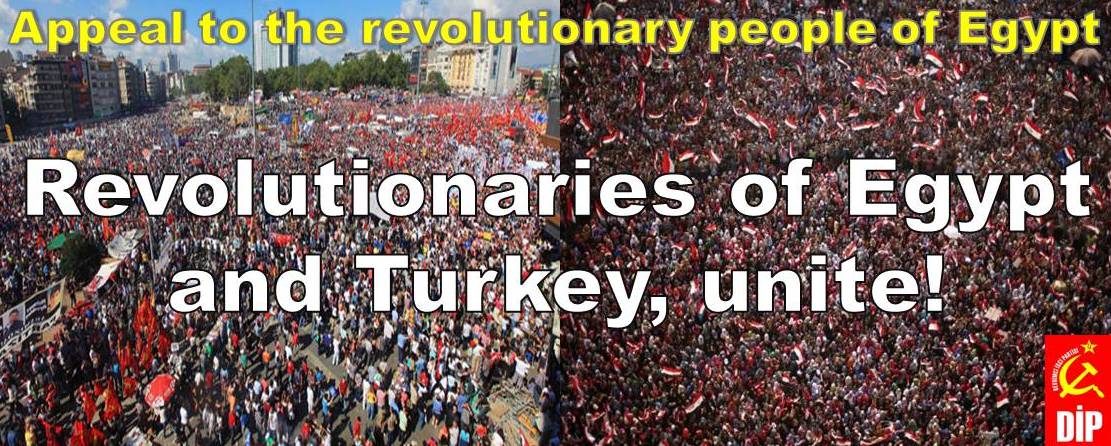
The near equality in strength of the two camps contending for power in Egypt led the army to stage a Bonapartist coup. It is not only the recent episode of unprecedented crowds in the millions coming out on 30 June that has made the army move. This struggle between the Muslim Brotherhood government of now deposed president Mohammed Morsi, on the one hand, and the opposition, represented by the National Salvation Front, and more recently by the Tamerod (Rebel) movement, on the other, has been going on since last November. This is, in fact, the third wave of spectacular demonstrations by the opposition within a cycle of the Egyptian revolution that has been going on since November. It was in November, in the wake of the so-called Constitutional Decree of Morsi, that the opposition started to challenge the legitimacy of the president. This first wave died down as a result of the electoral atmosphere created by the referendum on the constitution set for 15 December. Then on the second anniversary of the revolution (the Egyptians mark the beginning of the revolution, 25 January, as its date), there began another wave that lasted almost for a month. The mammoth demonstrations of 30 June and since are thus the third wave. The singularity of the 30 June rallies lies in the fact that, at least in Cairo, the crowds were simply too large to be compared to anything that went on before: not only was Tahrir square, the iconic centre of the Egyptian revolution, much more densely packed than on any previous occasion according to the unanimous commentary of all seasoned observers, but Ittihadiye, the area around the presidential palace in Heliopolis, drew crowds that would, on their own, rank this incident in the annals of mass protest anywhere in the world! So this was a formidable movement that would scare any party in government and any ruling class!
Lisää …